DIY Asian Marinade

Colby recently decided that he can cook! This is very exciting news for our household because I’m usually the one doing all the food prep. Colby’s specialty is grilling- he boasts that he can cook a perfect hot dog, sausage, or burger patty. When I pointed out that these are all pre-seasoned items and it really takes little more skill to grill a sausage than to microwave a frozen entrée, he stepped up his game. He bought a steak seasoning blend and flavored up some steak for the grill. Turned out awesome!

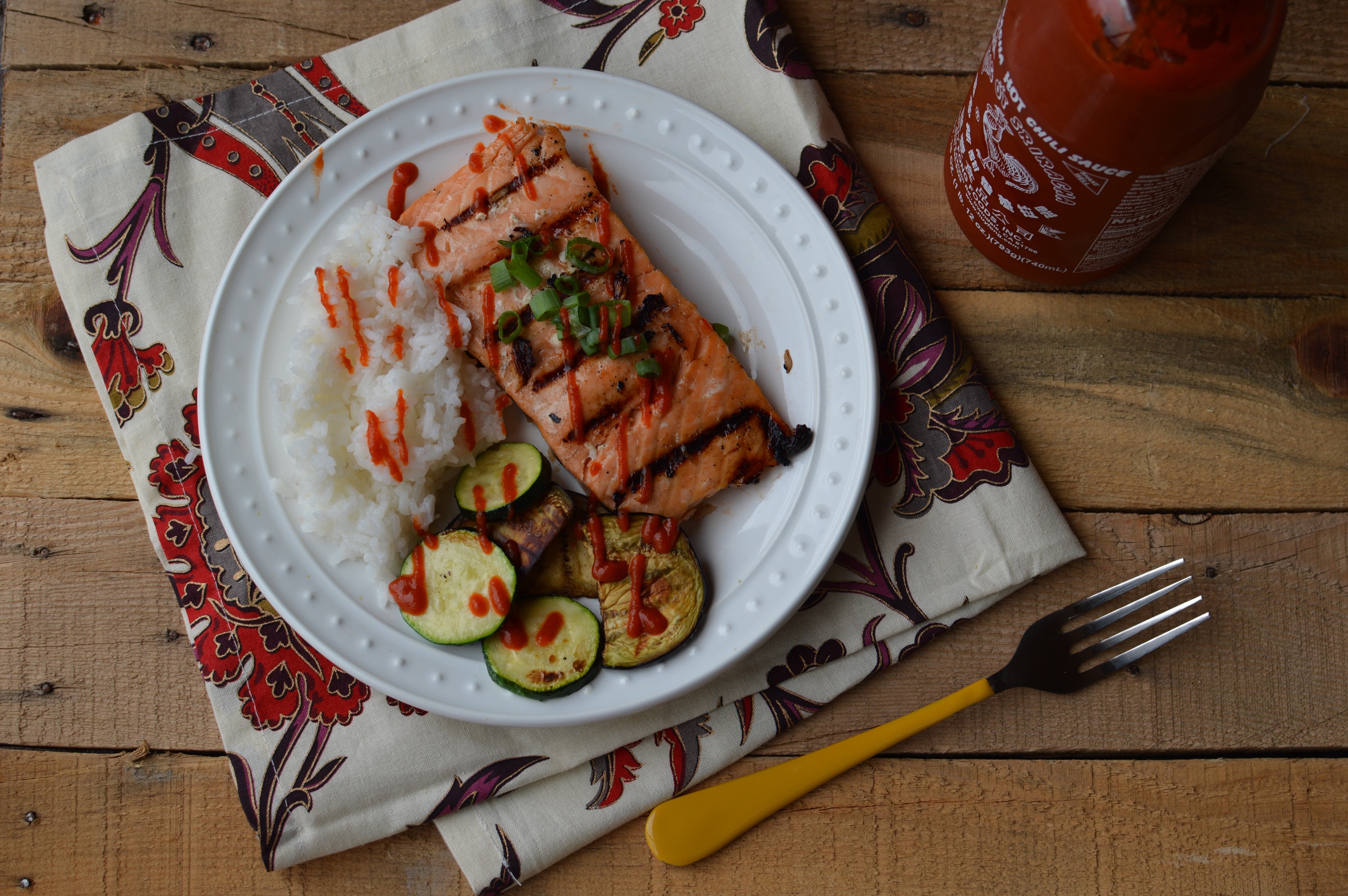
Next up, I challenged Colby to grill some salmon. This was partly to give him something new to try, but mostly to use up some of the three giant bags of salmon filets we have in our freezer from a recent Costco haul. Couldn’t pass up the great deal! Anyway, I made the marinade and he worked his manly grilling magic. 

You can buy a bottle of marinade or dressing at the store, but it’s typically less expensive, healthier, and more delicious to make these kitchen staples from scratch. Here is a flavorful Asian-inspired salmon marinade I like to use on salmon. If you use it on fish, only let it soak for 1 hour because fish flesh absorbs salt and flavor very quickly. If you’re using it on chicken or steak, you can get away with 8-12 hours (maybe more) of soaking.
  
DIY Asian Marinade (for 4-5 salmon fillets)
Ingredients:
3 tablespoons olive oil
1 tablespoon toasted sesame oil
3 tablespoons low sodium soy sauce
2 tablespoons honey
2 green onions, finely chopped
1 garlic clove, finely chopped
1 inch fresh ginger, peeled and finely chopped

Preparation:
1. Whisk all ingredients together in a bowl or shake together in a jar.
2. Transfer to a large zipper bag or a shallow dish for marinating the fish, poultry, or meat.
3. Marinate fish for 1 hour, meat for 2 hours, or chicken for up to 24 hours.
4. Remove the meat, poultry, or fish from the marinade, and grill or bake as desired. Discard excess marinade.

We grilled the salmon on hot, lightly oiled grates for about 4-5 minutes per side. It was flakey and caramelized on the outside, but not overcooked on the inside. I’ve made it in the oven before, too. Bake on a tinfoil lined baking sheet for 15 minutes at 400 degrees. 


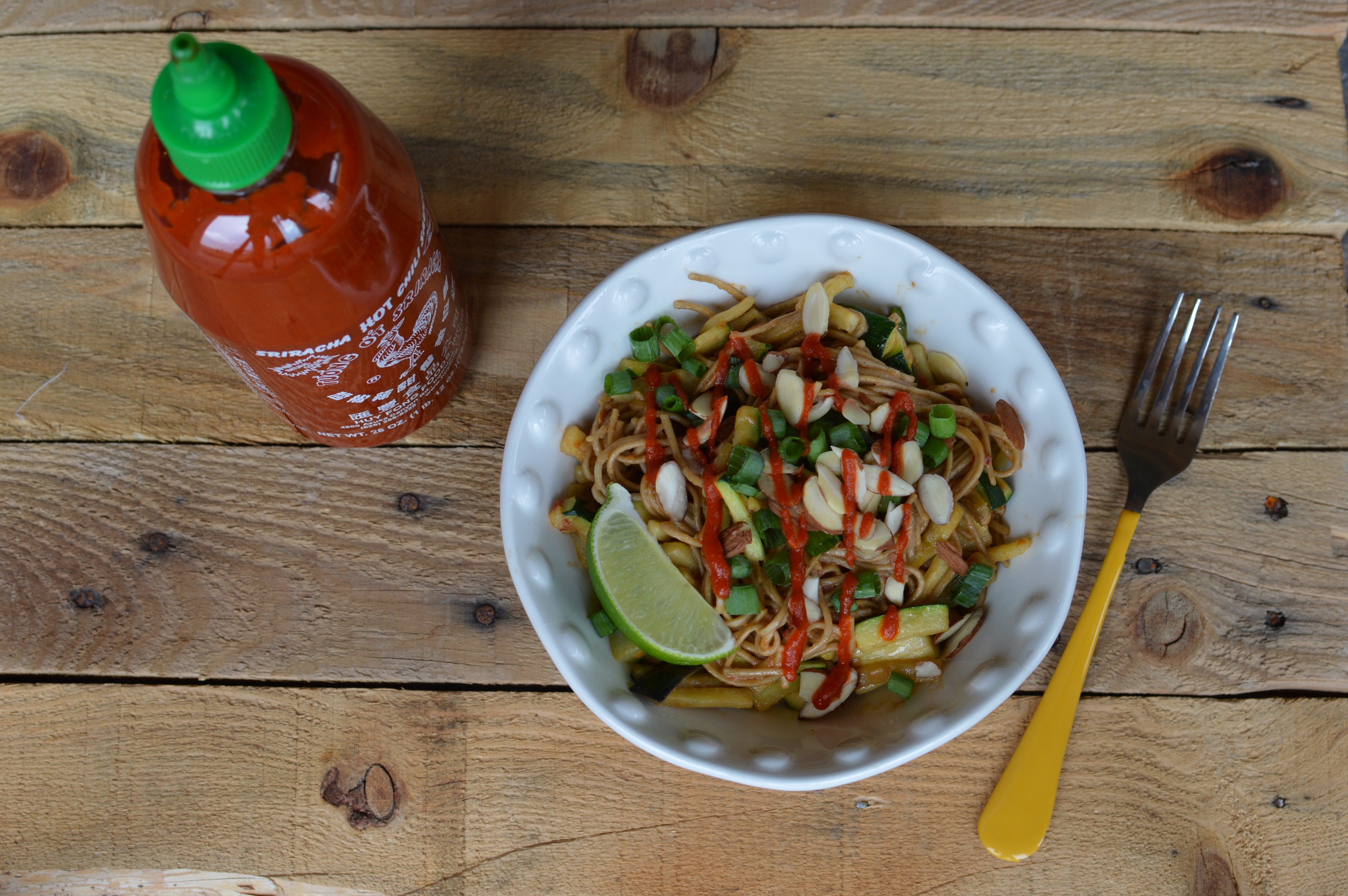
20 Minute Thai Soba Noodles

Forget macaroni & cheese, this noodle dish tastes better than take-out and I bet you’ll be able to make it in 15 minutes after a few tries! I’ve always been intimidated by the idea of cooking Thai food at home. I assumed it would involve tons of exotic ingredients that might end up collecting dust in my pantry for months. After browsing some pad Thai recipes online, I realized it doesn’t have to be all that complicated. You probably already have sriracha sauce, soy sauce, and peanut butter around, right? So you don’t need much more! Here are the other staples you’ll want to keep around for Asian cooking:

  • Fish sauce – This is a simple sauce of fermented anchovies, water, and salt. The flavor isn’t fishy when you add a tiny bit to food. Instead, it imparts a savory depth of flavor that will blow your mind! There’s a great article on Serious Eats about ways to harness the umami flavor in all kinds of world cuisine.
  • Fresh ginger – Makes everything taste fresh! Buy some ginger root, chop it up, and store in your freezer if you’re not going to use it frequently.
  • Soba noodles – These are Japanese noodles made with high protein buckwheat flour, which means they boast 8 grams protein per 2 oz serving. Best of all? They cook in FOUR minutes! (Yeah, I know I’m mixing Thai and Japanese cuisine with today’s recipe, but it works!)
  • Sambal olek- Chili paste. It’s like a thicker, chunky version of sriracha sauce. I’ve used it in my African pork tenderloin recipe here

Ready for an easy starter Thai recipe?? Here you go!

  
Ingredients:

(serves 1-2 people, depending on appetite)

3.1 oz bundle of dry soba noodles

1 tablespoon creamy peanut butter

1 tablespoon reduced sodium soy sauce

1 tablespoon water

1 teaspoon sambal olek (chili paste), or sriracha sauce

1/2 teaspoon fish sauce (optional)

2 tablespoons canola oil

1 teaspoon minced ginger

1 teaspoon minced garlic

1/2 cup julienned vegetables of choice (ie carrots or zucchini cut into little matchstick sized pieces)

 1 teaspoon apple cider vinegar

1 teaspoon brown sugar

3 oz shredded rotisserie chicken or cooked shrimp (optional)

Lime wedge, green onion, bean shoots, chopped nuts, and/or sriracha sauce for garnish

Preparation:

1. Bring a medium pot of water to a boil and chop all your vegetables. Prepare your sauce in a small bowl by whisking together peanut butter, soy sauce, water, chili paste, and fish sauce. Set aside.

2. Add soba noodles to the boiling water and cook for 4 minutes while completing the remaining steps.

3. Heat canola oil in a 10″ skillet. Add the garlic and ginger and sauté for 1 minute.

4. Add the julienned vegetables to the oil, ginger, and garlic. Sauté for an additional 2 minutes. 

5. Drain the soba noodles and toss into the skillet. Add apple cider vinegar, brown sugar, and sauce. Stir to coat. Add chicken or shrimp at this point, if using.

6. Serve hot and garnish as you wish. I like my noodles with a squeeze of lime, some chopped green onion, sriracha, and sliced almonds!

  
Seriously, don’t be intimidated by the longer ingredients list here! This dish is fantastic and super quick to make. It’s not a traditional “pad thai” dish, though. If you’re looking for something more authentic, head over to my friend Laura’s new blog, www.earth2laura.com, where she shares recipes for world cuisine. Today she is featuring a legit pad thai recipe

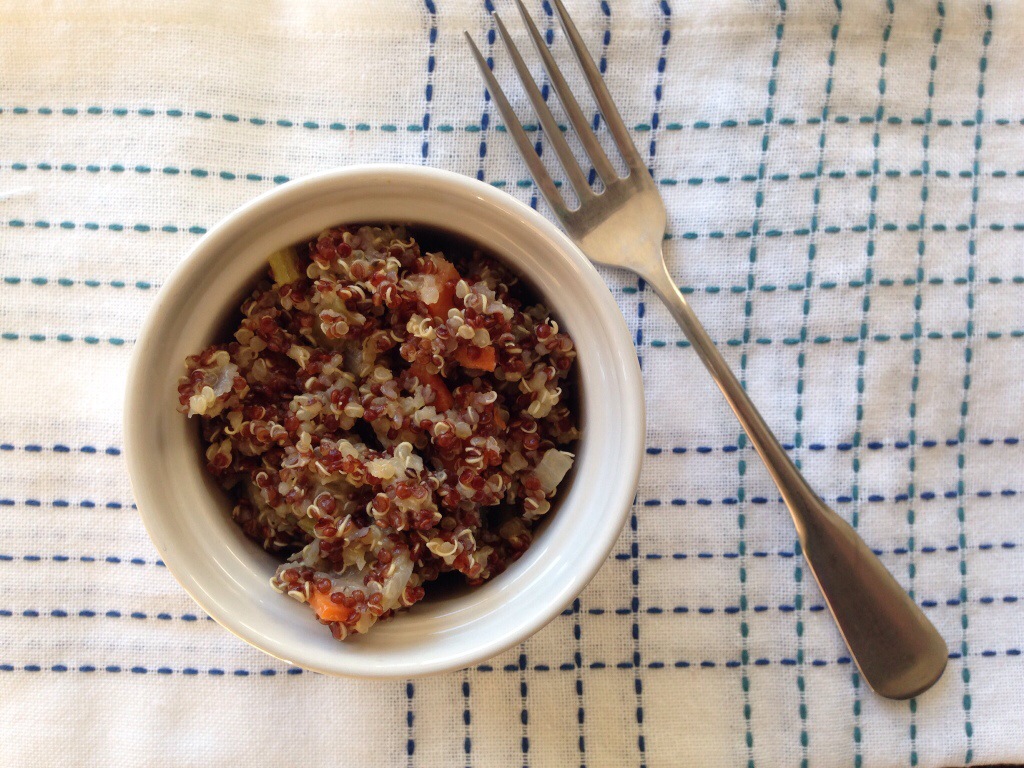
Perfect Quinoa With Veggies

I’m always surprised when people say they don’t love quinoa. Maybe they’ve been making it wrong. If you’re not convinced that quinoa is great, try this method and you won’t be disappointed!

20140329-080315.jpg

Ingredients
:

1 cup dry quinoa (I used tri-color quinoa)

2 cups chicken or vegetable stock

1 tablespoon butter

1 clove garlic, minced

1/3 cup diced celery

1/3 cup diced onion
1/3 cup diced carrot

1/3 cup diced zucchini

1/2 teaspoon thyme

Salt & pepper

Directions:
1. Heat dry quinoa in a medium saucepan over high heat, stirring frequently until toasted (about 2 minutes).

2. Add chicken or vegetable stock and reduce heat to a simmer. Cover. Cook for 15 minutes or until liquid is absorbed.

3. In a separate frying pan, heat the butter until it bubbles. Add the onions, celery, onion, and garlic. Sauté, stirring often to prevent burning, for about 3 minutes or until the vegetables begin to soften.

4. Add the diced zucchini and thyme to the vegetables and cook for another 1-2 minutes.

5. Stir the cooked vegetables in with the quinoa once it has absorbed all the stock. Season with salt and pepper. Serve warm.

 Confession: I made this recipe a few months ago and forgot to post it! This was before I had my nice camera. Luckily, zucchini is in season a lot of the time in Vegas, so this recipe can be considered “seasonal” in the winter or summer here! For those of you in other parts of the country (or world), the zucchini will taste best and cost the least in summertime! Enjoy and check out some more seasonal recipes below:

Protein Pancakes with Cranberry Grapefruit Sauce

Like many of my recipes, this one is inspired by a single ingredient. In this case, I had about a cup of whole cranberries in the freezer that needed to be used up. The grapefruit and cranberries have a nice tart bitterness that is well balanced with rich brown sugar in this compote over protein pancakes.

There are dozens and dozens of recipes for protein pancakes available online. You can follow mine, choose another, or create your own! It’s amazing that almost anything can be turned into a pancake as long as you have something like egg to hold the batter together!  If you end up having extra cranberry grapefruit sauce after topping your pancakes, use the leftovers with Greek yogurt or swirled into oatmeal.

I made this dish over the weekend to recover from an evening of beer tasting and to lay a good foundation for a day of brewing our first beer with Colby! Our experienced home brewing friends came over to walk us through it, so I think the nut brown ale fermenting in our bathtub will turn out great! I’m excited to think of ways to use the spent grains in recipes too- maybe in cookies, blondies, or a hearty beer bread? …or pancakes!

Anyway, enjoy this recipe at your next summer brunch get together with your favorite people! 

 
Ingredients:

(Serves 2-3)

For the pancakes:

1/2 cup oats, crushed up in a blender

 2 scoops vanilla protein powder (I used whey protein isolate)

1 teaspoon baking powder

1/2 cup egg whites

1/4 cup plain Greek yogurt

Milk of choice to thin the batter

Cooking spray

For the sauce:

1 cup fresh or frozen whole cranberries

1/2 cup grapefruit juice

1/4 cup brown sugar (or more, if a sweeter sauce is desired)

1 teaspoon cornstarch dissolved in 1 tablespoon cold water

1 teaspoon lemon juice

Pinch of salt

Preparation:

1. Prepare the pancake batter by combining all dry ingredients in a mixing bowl and stirring in the wet ingredients. Add milk as needed until a batter consistency is reached that will spread easily, but not thinner than 1/4 inch, when poured on a hot pan or griddle.

2. Heat a lightly greased pan or griddle over medium heat and pour 1/4 cup of batter per pancake. Flip when bubbles begin to form (approx. 3 minutes). Continue to cook until both sides are golden and the pancake batter is cooked through.

3. To make the sauce, combine cranberries, grapefruit juice, and sugar in a small saucepan over high heat. Bring to a boil, then reduce to heat to low and simmer for 5-7 minutes. 

4. Add the cornstarch dissolved in water and stir until it is translucent and the sauce thickens. Stir in lemon juice and pinch of salt.

5. Serve sauce over pancakes and top with whipped cream or yogurt, if desired.

Do you have a favorite protein pancake recipe? I’m thinking of trying one with cottage cheese next time! Thanks for reading, my friends!

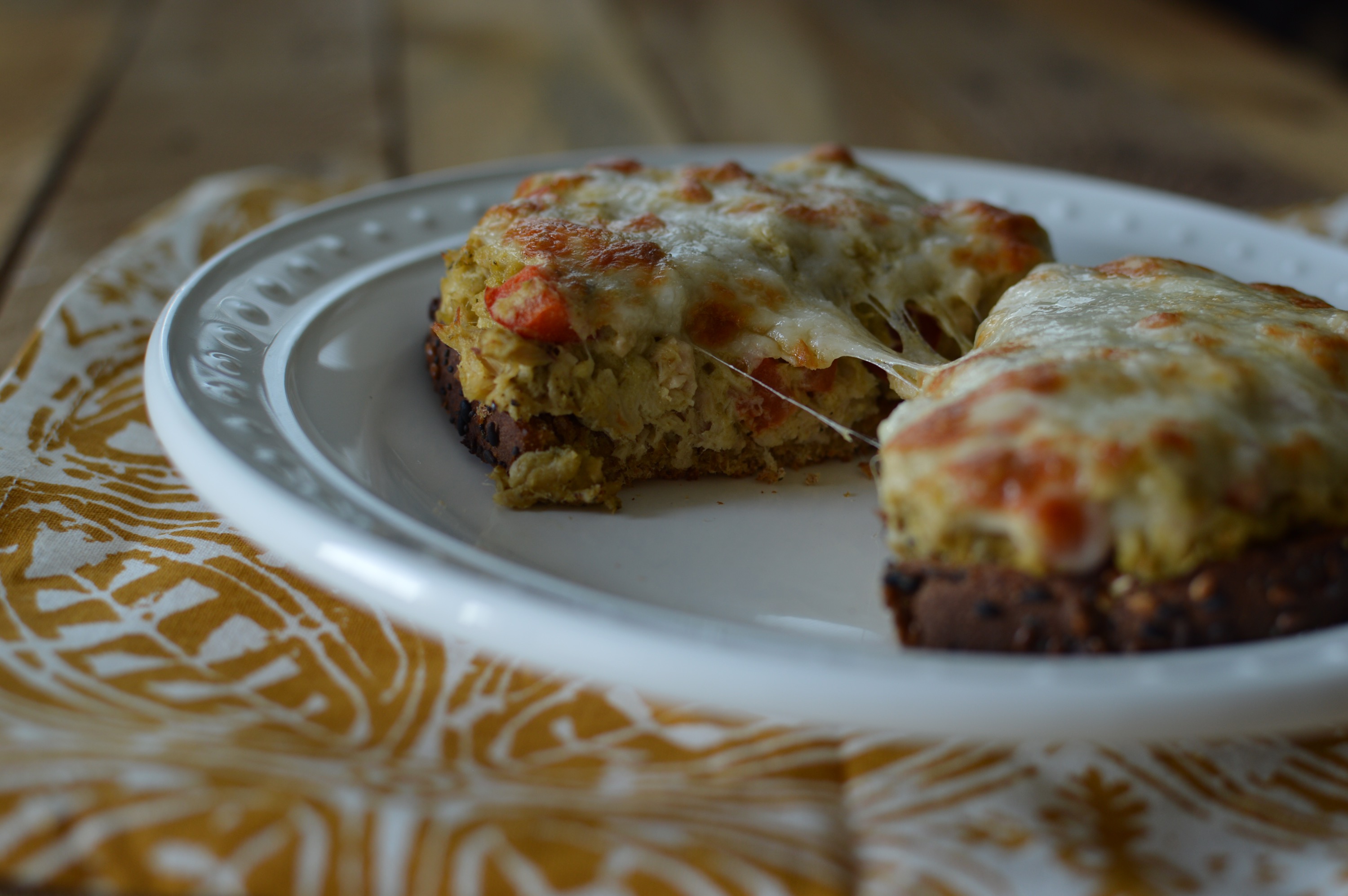
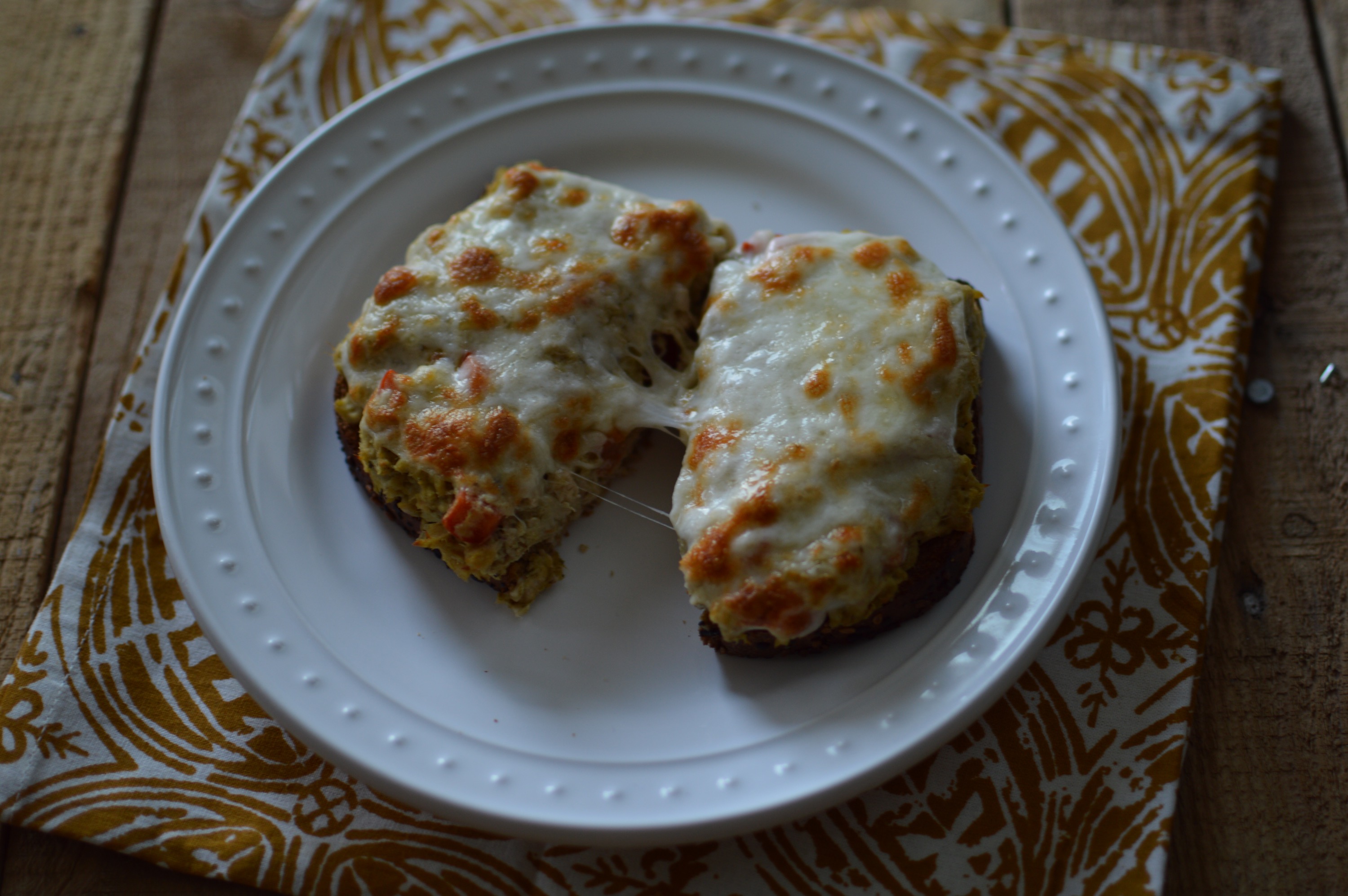
Pesto Tuna Melts

*By posting this recipe I am entering a recipe contest sponsored by Bumble Bee Seafoods and am eligible to prizes associated with the contest. I was not compensated for my time.

I made this recipe for the nights you don’t have time, energy, or ingredients to cook with. That was me every night this week. I got back from 10 days out of town last Sunday, and hadn’t had time to meal prep or grocery shop. I ended up buying a rotisserie chicken and salad mix  Monday morning for lunches at work. I also picked up greek yogurt, almonds, and apples for snacking. I cooked something fast and easy every night this week- rotisserie chicken quesadillas and grilled vegetables, blueberry banana protein shakes, and these pesto tuna melts.

I had a few cans of tuna on hand since Bumble Bee Seafood generously provided me with samples for this recipe! Here’s some interesting information from the company:

-A researcher at the Harvard School of Public Health stated that “seafood is likely the single most important food one can consume for good health”.

-Canned seafood is a convenient, affordable, nutritious and delicious way to make sure you and your family are eating enough seafood.

Bumble Bee® Solid White Albacore Tuna in Water, the kind used in this recipe, boasts:

-An Excellent Source of Protein

-High in Selenium and Niacin

-A good source of Vitamins B6 and B10

-Free from Saturated Fat

After following a recipe I googled for a tuna salad sandwich that Colby wasn’t crazy about a few weeks ago, I asked him what would make a perfect tuna melt. He informed me that (1) toasted bread, (2) something crunchy like apples in the mix, and (3) gooey cheese are all necessary components. This recipe is a fun twist on a classic tuna melt that still honors all the key features of a great tuna melt!

  
Ingredients: (serves 1)

1 slice whole wheat bread

1 five oz can Bumble Bee® Solid White Albacore in Water, drained 

1 tablespoon diced red bell pepper

1 tablespoon finely diced red onion 

2 tablespoons prepared pesto

1 teaspoon mayonnaise (optional)

salt and pepper to taste

2 slices tomato

1 slice mozzarella or provolone cheese

Preparation:

1. Toast the whole wheat bread. While the bread is toasting, combine tuna, bell pepper, onion, pesto, and mayonnaise in a bowl with a fork. Season to taste with salt and pepper.

2. Spread the tuna mixture evenly over toasted bread. Top with tomato slices and cheese.

3. Broil the sandwich for 5-10 minutes or until the cheese is golden and bubbly. Cut in half and enjoy!

  
This sandwich is filling and easy to make! Canned tuna is such a life saver when I don’t have other protein sources on hand. I hope you enjoy this Italian twist on a classic sandwich. 


Mini Nectarine Pies with Honey Greek Yogurt

Summer is officially here! I can actually say I’m ok with that even though Vegas temperatures get into the 110’s this time of year. At least it’s not humid. It’s pleasant to be outside in the evening after the sun goes down and I’m pretty much at work all day until then. It’s freezing cold at my office, which makes getting into my furnace of a car more bearable. 

After making these pies yesterday I spent some time trying to acquire a taste for IPA beers. It’s still a work in progress, but I’m excited about it and Colby is thrilled that I’m finally trying more beers. I have more appreciation for the beer making process after reading about home brewing a bit. It’s pretty amazing that a drink made of just a few simple ingredients- barley, water, yeast, and hops- can have a huge flavor range. Each of the ingredients significantly and uniquely contributes to taste. I’m back to drinking wine today, though! Compared to the bitter IPA’s, wine tastes smoother than ever.

Tonight’s summer wine is the Honey Moon viognier fresh out of the freezer. It’s more of a wine slushie and it’s a perfect patio wine: light, sweet, and fruity. Pick one up at Trader Joe’s for $5.99.

You can even sip it with this recipe! The Recipe Redux challenge for June is to create a healthier pie. My plan was to make rhubarb pie, but I didn’t feel like going out in the heat to pick up ingredients. Fortunately I had a few fragrant nectarines and limes in the house. Sometimes the best recipes happen by accident or when you don’t have everything you need on hand.

These pies are healthier because they’re portion controlled and lower in sugar than traditional pie. The crust is made with oats and coconut and the pies are topped with non-fat Greek yogurt in place of ice cream. Enjoy!

  Ingredients:

(Makes 8 mini pies)

For the crust:

3/4 cup all-purpose flour

3/4 cup old fashioned oats, whole or crushed by pulsing in a blender or food processor 

1/4 cup shredded sweetened coconut

1/4 cup canola oil

2 tablespoons ice water

For the filling:

4 large nectarines, pitted and diced 1/2″

Juice of half a lime

 2 tablespoons white sugar

2 tablespoons brown sugar

1 tablespoon cornstarch

pinch of salt

dash of cinnamon (optional)

For the topping:

8 oz plain non-fat Greek yogurt

1-2 tablespoons honey , according to preference

Preparation:

1. Preheat the oven to 425 degrees and lightly grease a muffin tin with cooking spray.

2. In a large bowl, combine all ingredients for the crust and mix until fully incorporated and a doughy ball forms. 

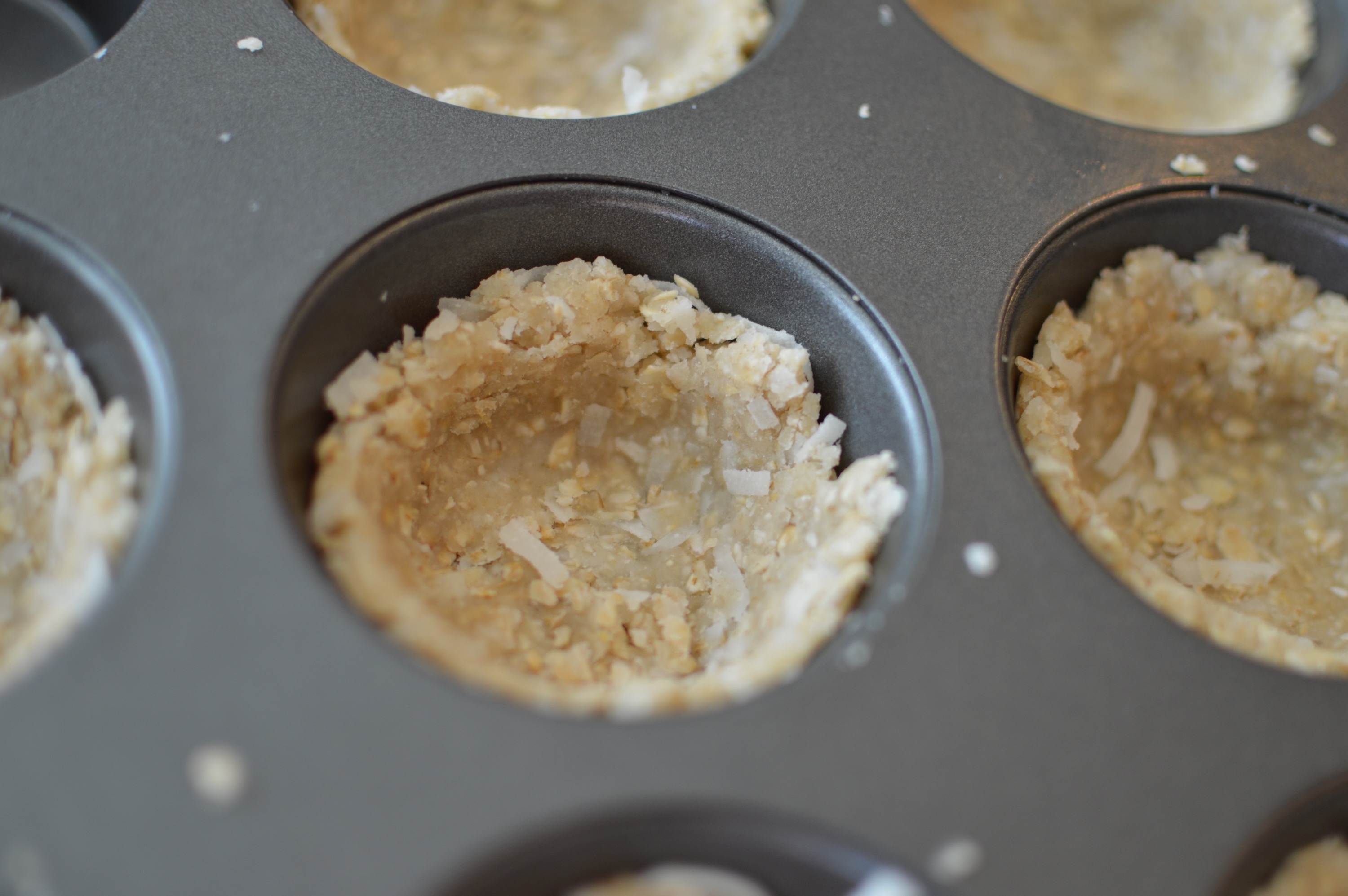
3. Take about a golf ball sized chunk of the dough and press it into a muffin tin with your hands. Press it down and push it up the sides to spread it thin. (See picture below) Repeat using the rest of the dough to fill 8 muffin cups.

4. Bake the crust for 8-10 minutes until golden and fragrant. While the crust is baking, toss together nectarines, lime juice, sugar, cornstarch, salt, and cinnamon (if using) in a large bowl. 

5. Allow the pie crusts to cool slightly before scooping in the filling. Use a spoon to scoop the nectarine filling evenly among the cups. Bake for another 15 minutes, or until the nectarine filling is bubbling. 

6. Cool the pies in the tin until ready to serve. Remove from the tin gently using a butter knife. Just before serving, stir honey into greek yogurt and top each pie with a 1 oz dollop of the honey yogurt.

Unbaked pie crusts:


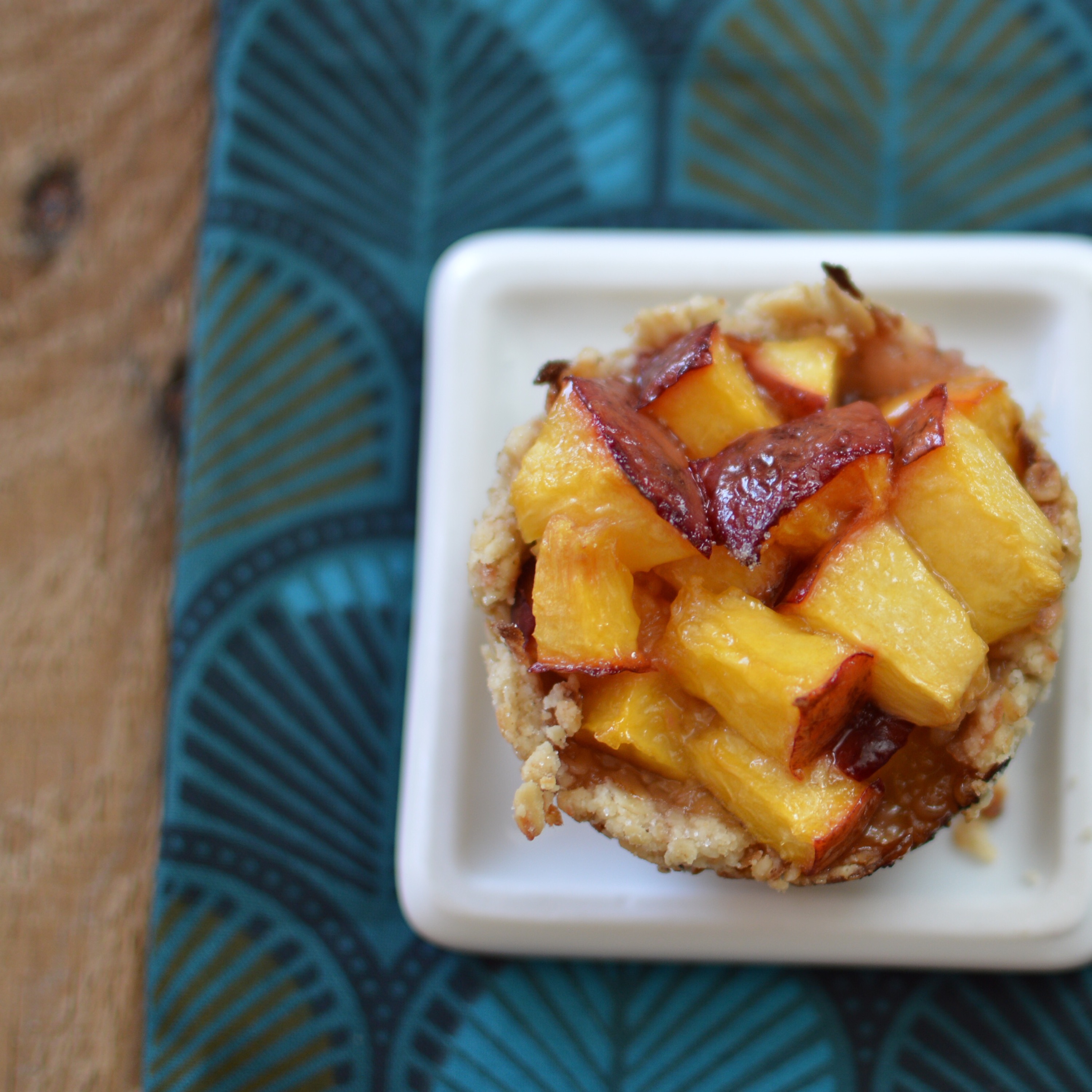
Baked nectarine pies without topping:


Finished pies with Greek yogurt topping:


Enjoy these and check out some of the other healthy pie recipes developed this month by Recipe Redux bloggers below: 


Avocado Chicken Salad

There are ingredients you should always have on hand in the summertime for easy, no-cook meals. Today’s recipe features most of my favorites. 

Rotisserie chicken – Less expensive than buying a whole, raw chicken! How could you pass this up? Use it in salads, on sandwiches, or serve with grilled vegetables this summer.

Avocado – Perfect on everything, from eggs to salads and sandwiches to guacamole on chips. 

Tomatoes, Red Onions, Limes, and Fresh Herbs – No need to cook these fresh tasting produce items! They’ll brighten up any summer meal. 

Since getting back from vacation I feel like working all day takes up so much time that I just don’t want to spend more than 20 minutes in the kitchen in the evening. I’d rather spend my nights feeling like I’m still on vacation with a glass of wine on the patio. This chicken salad is very refreshing with white wine. Try it with this amazing find at Trader Joe’s:

 
Pancake Cellars’ Big Day White is dangerously drinkable. It offers flavors of white peach, apple, cantaloupe, orange blossom, honeysuckle, and lemongrass. At least that’s what it says on the label. To me it just tastes like summertime perfection! Oh, and did I mention it’s only $5.99? 

Pour yourself a glass and get started on the salad!


Ingredients:

(Serves 1)

1 cooked chicken breast (5-6 oz, skin removed)

1 roma tomato, diced

2 tablespoons finely diced red onion

1/2 an avocado, diced

1/2 a lime, juiced

1/4 teaspoon cumin

Dash of salt and pepper

1 tablespoon fresh cilantro or parsley, chopped (optional)

Preparation:

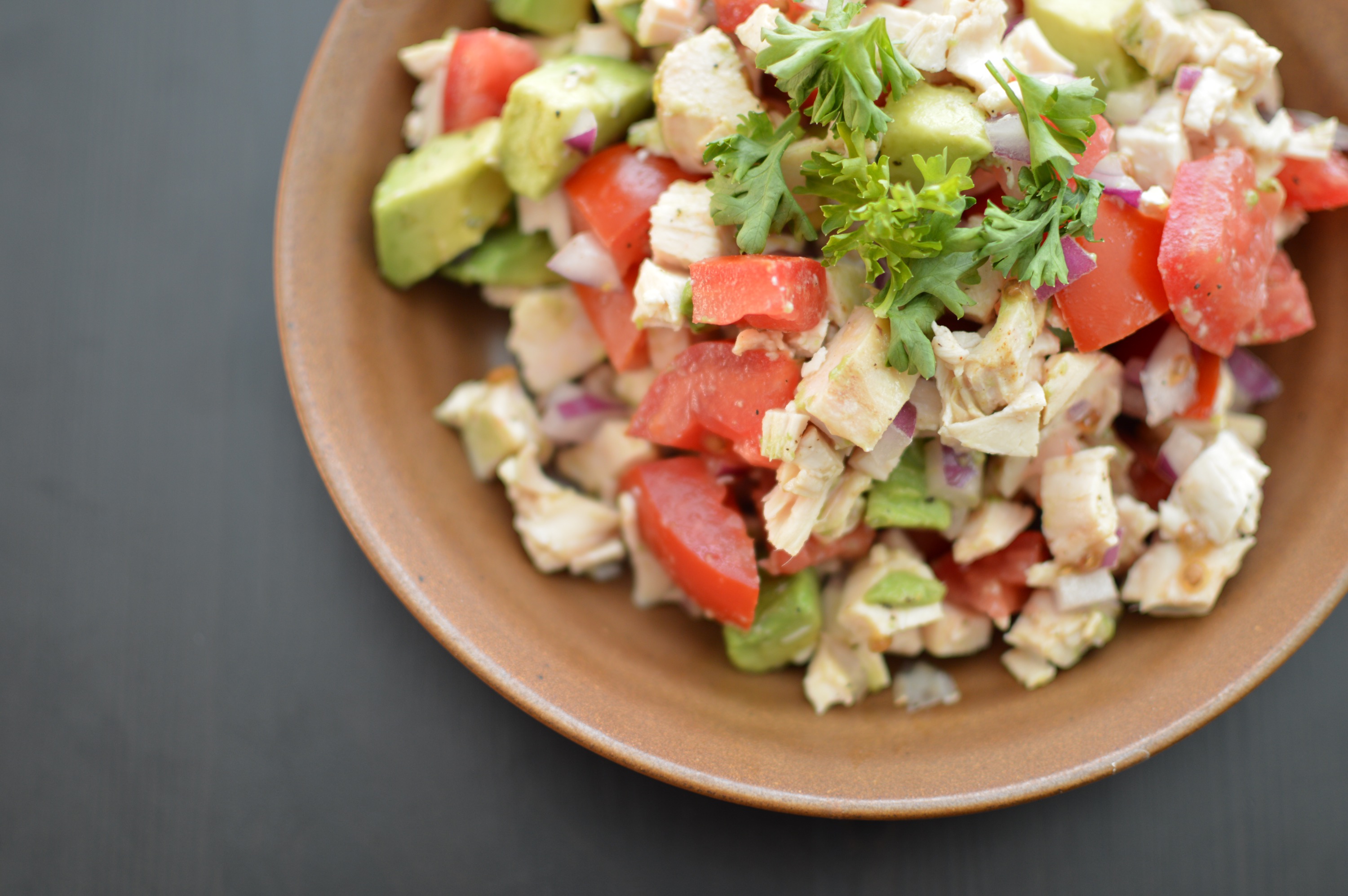
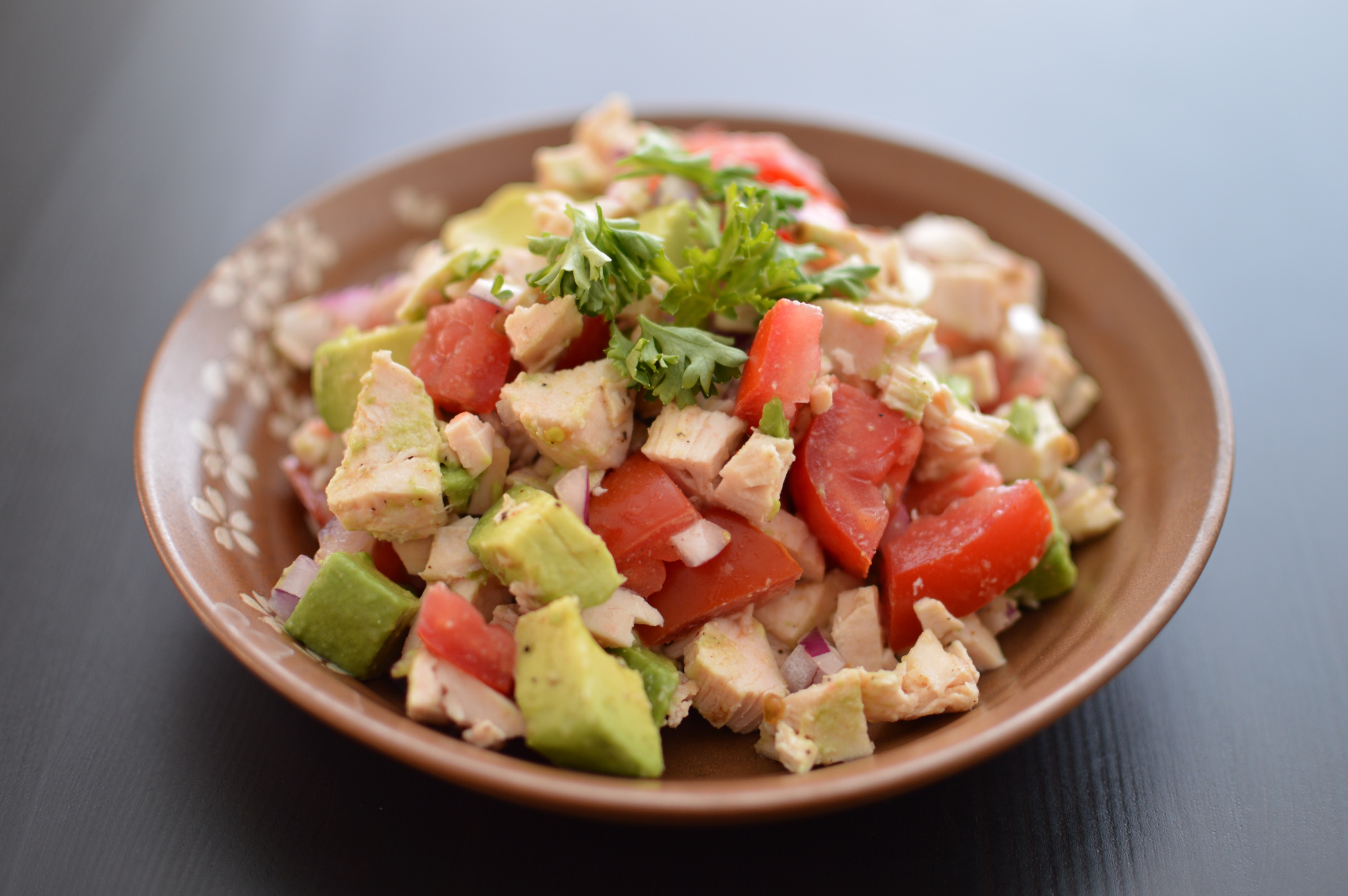
1. Gently fold together all ingredients in a mixing bowl and serve. Boom.

Easy, right? I just took a break from house cleaning for 10 minutes to make and eat this. Tidying up the house is much more fun with a glass of wine, Spotify’s “Cleaning the House” mix playing, and fueled up with this refreshing salad. 

  
I used rotisserie chicken in my salad, but you could easily use poached or grilled chicken breast instead. I’ll bet this is good with a swirl of Greek yogurt or sour cream added in. Enjoy!

What are your favorite summer meals and wines? 

Bacon and Eggs Breakfast Salad

Breakfast salad? Yes, please! I wrote this recipe for a contest using Davidson’s Safest Choice Eggs, which are pasteurized using a water bath process that eliminates the risk of Salmonella in eggs without changing their flavor or nutrient composition. These eggs are a a particularly great choice for recipes that do not call for fully cooking the eggs. Examples include smoothies, ice creams, salad dressings, sauces, and poached eggs. 

The poached egg in this recipe combines beautifully with the tangy lemon juice and savory bacon fat to make a dressing that will make a salad lover out of anyone! Don’t worry, it’s lightened up with the use of center cut bacon and substituting olive oil for a portion of the bacon fat. Enjoy this summer salad guilt free as a light dinner with crusty bread or accompaniment to brunch with friends. Oh, and don’t skip the step of massaging your kale! It’s worth the extra effort, as the bitterness of the leafy green will be mellowed by the lemon juice.

  
Ingredients:

1 bunch kale, purple or green

Juice of half a lemon

Dash of salt

1 tablespoon olive oil

4 slices center cut bacon, diced

1 tablespoon thinly sliced red onion

2 tablespoons distilled white vinegar

2 large eggs

2 radishes, sliced

Freshly ground pepper, to taste

Preparation:

1. Begin by tearing the leaves from thicker stems of the kale. Discard the stems and thinly slice the leaves. Place the kale in a large mixing bowl and drizzle with lemon juice, salt, and olive oil.

2. Massage the kale for 2-3 minutes with your hands, or until it is beginning to soften.

3. Cook the diced bacon in a frying pan over medium heat, stirring occasionally until golden. Add the red onion, sauté for 60 seconds longer, and remove from heat.

4. Bring 2 quarts of water to a simmer in a saucepan. Add the white vinegar. Break an egg into a small bowl or cup and gently pour into the simmering water. Using a slotted spoon, gather the egg white around the yolk. Repeat with the second egg. Cook for about 90 seconds for runny eggs, or up to 3 minutes for firmer eggs.

5. Top the massaged kale with the warm bacon and onion mixture and toss to combine. Divide the kale between two plates or shallow bowls. Top with sliced radishes, one poached egg, and freshly ground pepper. 

  
Don’t you love that poaching eggs isn’t as difficult as it seems? I think this method is fool-proof. I hope it works for you, too! 

What are you cooking this summer? Check out the links below for more safe egg inspiration!

*By posting this recipe I am entering a recipe contest sponsored by Davidson’s Safest Choice Eggs and am eligible to win prizes associated with the contest. I was not compensated for my time. 


Weight Watchers Review

Yes, I’m a Registered Dietitian and I signed up for Weight Watchers this year. The company was running a promotion and lots of awesome commercials around Super Bowl Sunday. They had just rolled out a new program, Personal Coaching, which matches you up with an accountability partner who you can call, email, or text whenever you’re struggling with making a healthy food choice. The personal coaches are all people who have successfully lost weight and kept it off for years using the Weight Watchers program.

Weight Watchers has been ranked the top commercial weight loss program on US News’ annual report for the past several years! Experts agree that it encourages healthy eating habits and its long term success is fairly well documented.

This may come as a shock to you, but even Registered Dietitians struggle with their weight sometimes. My weight has always fluctuated, and in February I found myself looking and feeling less than my best. I was about 10 pounds heavier than I like to be and was struggling with overeating junk foods. The timing was perfect because Weight Watchers was offering a money back guarantee to anyone who tries the program and successfully loses 10 pounds in 2 months. I took some (unflattering) before pictures and signed up!

The first thing I did was fill out a questionnaire. The survey basically asked about my eating habits, who I live with, and what aspects of eating I struggle with the most. I initially thought it was a very helpful assessment, but later discovered that it is just used as a tool to help the coach get you started. Over time, my plan evolved away from my initial responses to the questions.

I was put on 26 points per day, with 49 bonus points available per week to splurge on additional foods. I picked my coach off a list of people suggested for me. My coach, Cheri M., described herself as someone who would be my cheerleader and accountability partner. I loved the energy she portrayed in her profile, and I’m so glad I picked her!

Two months, 8 or 9 phone calls, and about a dozen emails later, I was down 10 pounds and keeping them off! I stayed signed up for an additional month to learn about Weight Watchers maintenance techniques. In the maintenance phase my daily points increased to 32 instead of 26 and I still had my 49 bonus points per day. I started out weighing 138 lbs and ended up 128 lbs at 5’3” and 27 years old.  I am no longer using Weight Watchers, but I would recommend this program to adults wanting to lose weight.

If you’re considering Weight Watchers’ Personal Coaching program, here are some pros and cons I’ve come up with:

PROS:

  1. Incentives! I liked being motivated by getting my money back. At almost $60 per month, the personal coaching program wasn’t excessively expensive, but $120 is enough money to buy some cute new workout clothes, a massage, or a few pedicures!  I was determined to succeed so I could prove to myself I could do it and get that money back to treat myself to something nice.
  2. You can eat anything! Weight Watchers counts points, and you get a certain number of points per day. I was given 26 Points Plus per day to use on whatever foods I wanted. Obviously, it makes more sense to eat a lot of low point foods to feel more satisfied, but not having any foods “off limits” made it a lot more manageable to stick with the plan.
  3. Emphasis on fruits and vegetables. Fruits and vegetables have zero Points Plus! That means that (most) fruits and vegetables are “free foods.” Whenever I was hungry between meals or wanted to make a meal more filling, the best strategy was to munch on fruit or pile a sandwich high with vegetables. I was a little concerned that I wouldn’t lose weight because I was eating so much more fruit than usual, but the weight still came off. It really is true that it’s very difficult to gain weight from eating too much fruit.
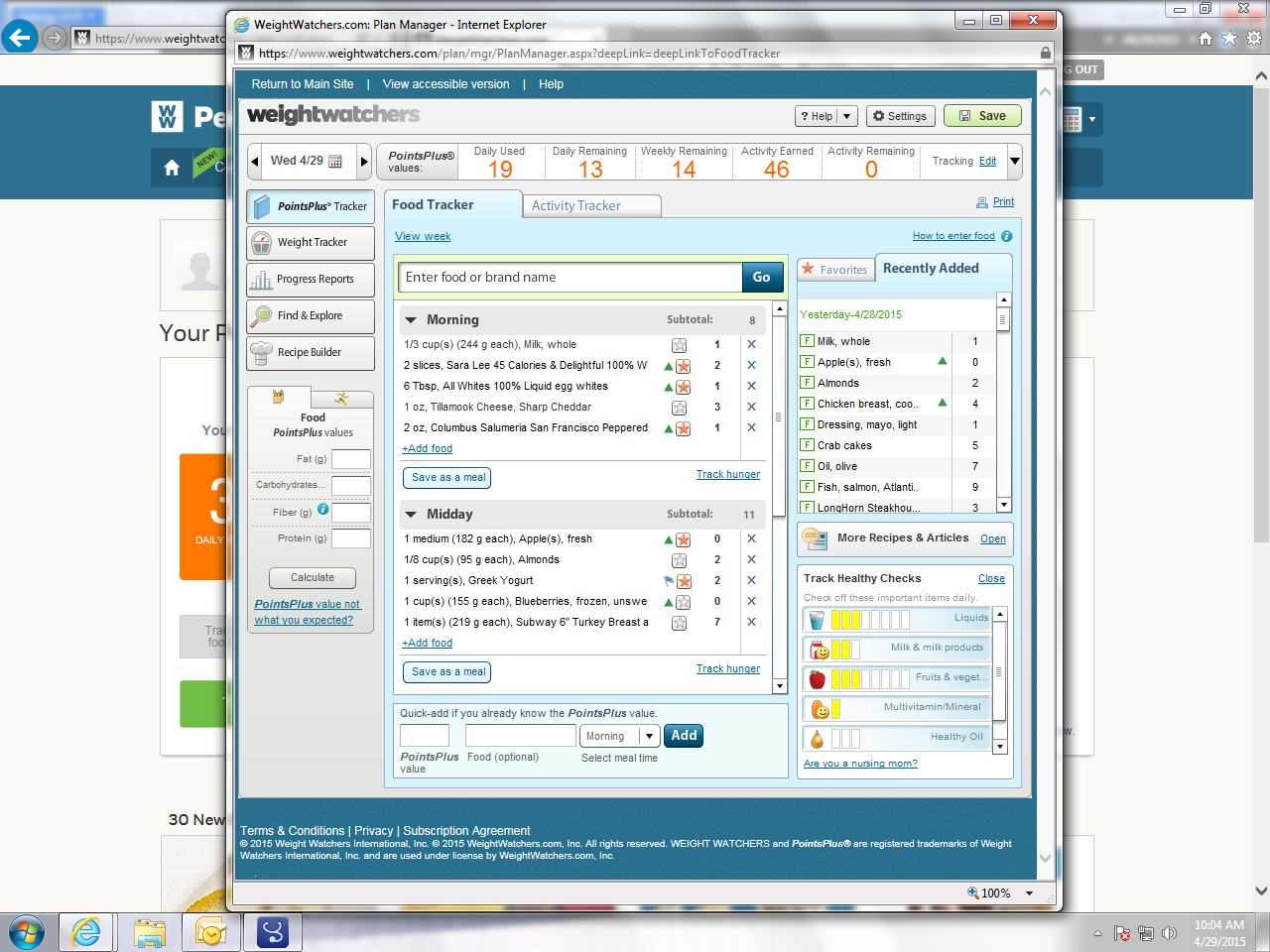
  4. Weekly bonus points and activity points! I was given 49 extra points each week to use if I wanted to splurge a little. Typically, I would use most of those points on a single day, but sometimes it was helpful to have a couple extra points available each day. You earn activity points by engaging in physical activity and can use those extra points on food, too. You even get a choice of letting the activity points “rollover” from day to day or have them expire at the end of each day. Thinking of points as food currency was a good mental trick for budgeting my calories better.
    WW Screenshot 2
  5. Weekly weigh ins and reset. Some weeks I went over my Points Plus allowance, even with the weekly bonus points and activity points. It would have been discouraging to see that failure follow me for weeks, but the nice thing is that all your weekly bonus points reset once per week! It was good for me mentally to have the slate wiped clean. Weighing once a week was nice, too. I chose Wednesdays for my weigh in day since some studies have suggested that’s the day of the week people typically weigh the least. Once a week was enough to hold me accountable, but also keep me from obsessing over small fluctuations in weight.
    WW Screenshot 1
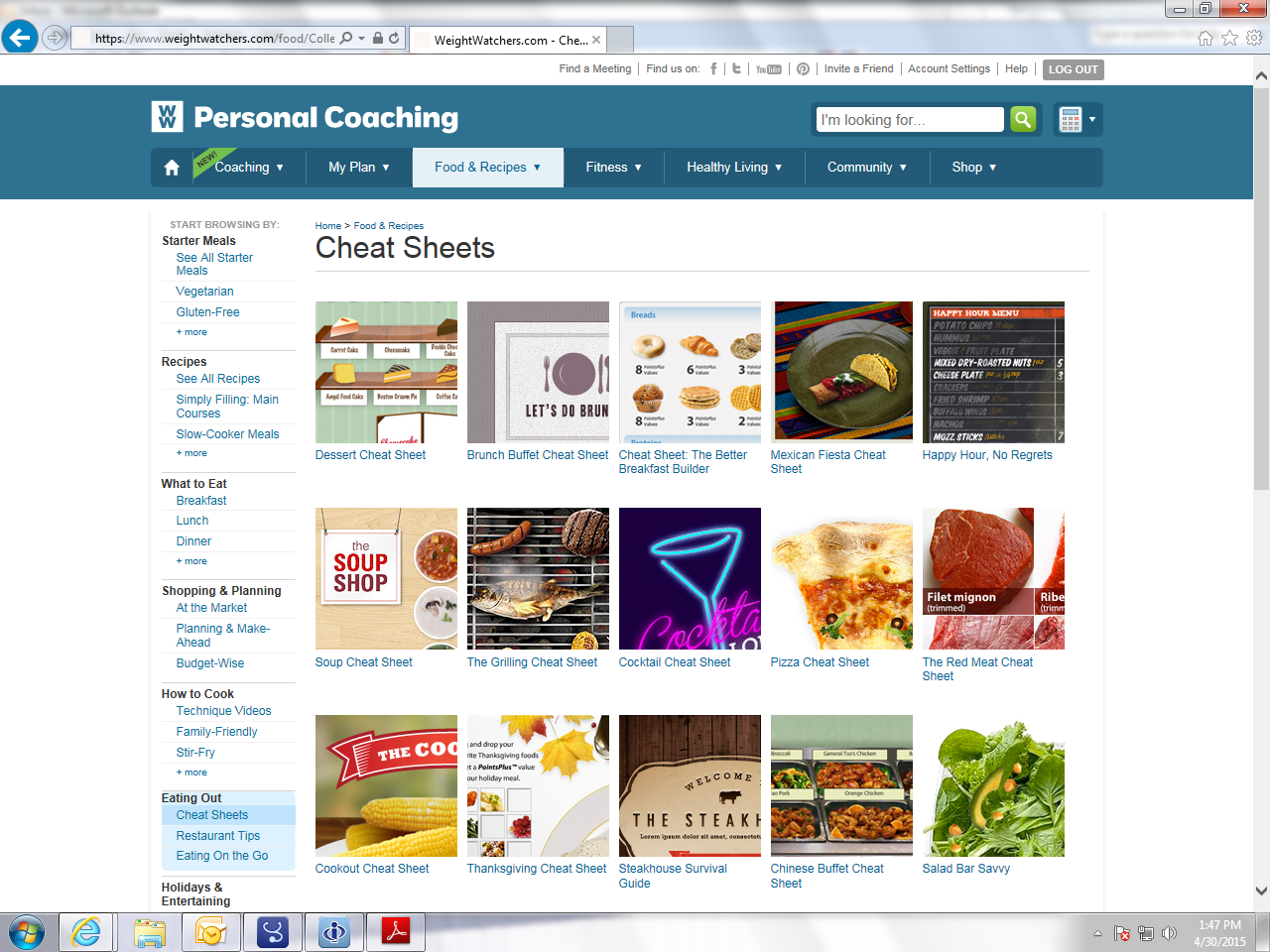
  6. The website. Weight Watchers’ website has lots of great tools, including “cheat sheets” and videos to help you choose low point options at the bar and restaurants. They even have tutorials for learning how to estimate Points Plus in foods when the nutrition information is not available.
    WW Cheat SheetsWW Cheat Sheet Cocktails
  7. My coach! My faaaavorite aspect of the Weight Watchers personal coaching program was my personal coach, Cheri M. She was absolutely wonderful. We had a phone call to talk about progress and plan for the upcoming week on my weigh in day each Wednesday. Cheri always started the conversation by asking me what went really well that week and then cheered me on to keep it up. We would then spend a few minutes thinking ahead to the coming week to plan for upcoming challenges or address difficult patterns I was falling into. Cheri shared some really great, creative ideas with me that I was able to get very excited about! For example, when Colby and I went out of town for the weekend, she asked me to first consider how I wanted to feel when I came back from the trip and then establish what choices I would have control over on the trip to feel that way when I got back. It really helped to keep my food choices in check while we were traveling to San Francisco; I was able to enjoy some treats, but came back feeling energized and proud instead of bloated and full of remorse. In addition to the wealth of helpful information, Cheri wrote “action plans” for me each week. The action plan was typically a three part commitment for the upcoming week. Here’s an example of one of my action plans:
    1. I will pre-track my breakfast and lunch each day (Monday-Friday) before work.
    2. I will be in bed by 9pm Sunday-Thursday and by 10pm Friday-Saturday.
    3. I will pack a lunchbox full of snacks I can graze on throughout the day on Saturday and Sunday.
  8. It actually works! I lost 10 pounds in 2 months and got my money back! I’m still keeping it off. Once I lost the weight, my daily Points Plus increased to 32 per day. For each week of maintenance, if I was able to keep my weight within 2 lbs of my goal weight, my daily Points Plus stayed at 32 and I still got my 49 weekly bonus points. Even though I’m no longer paying for Weight Watchers, I feel like I learned some helpful strategies and healthy habits from the process.

CONS:

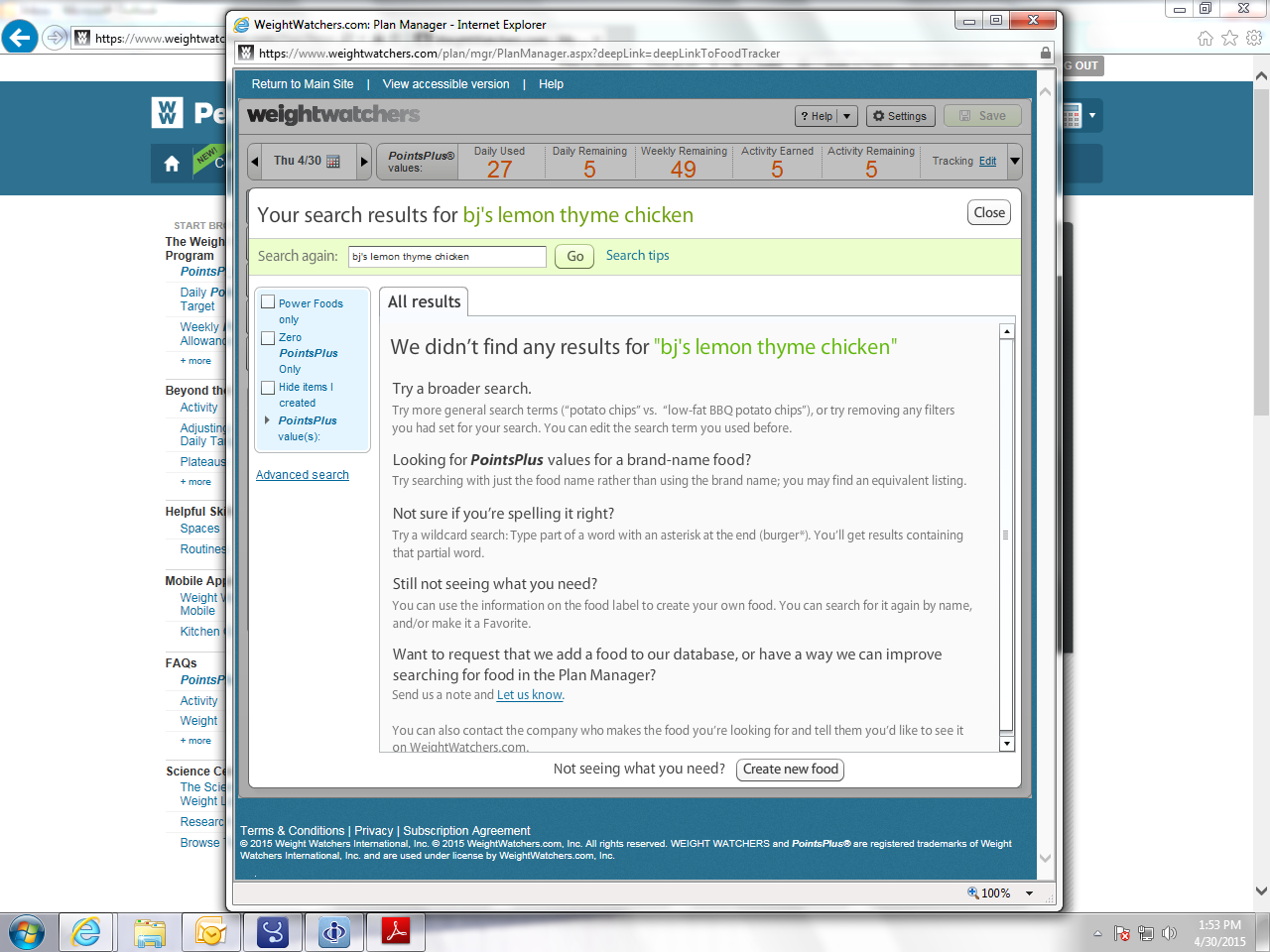
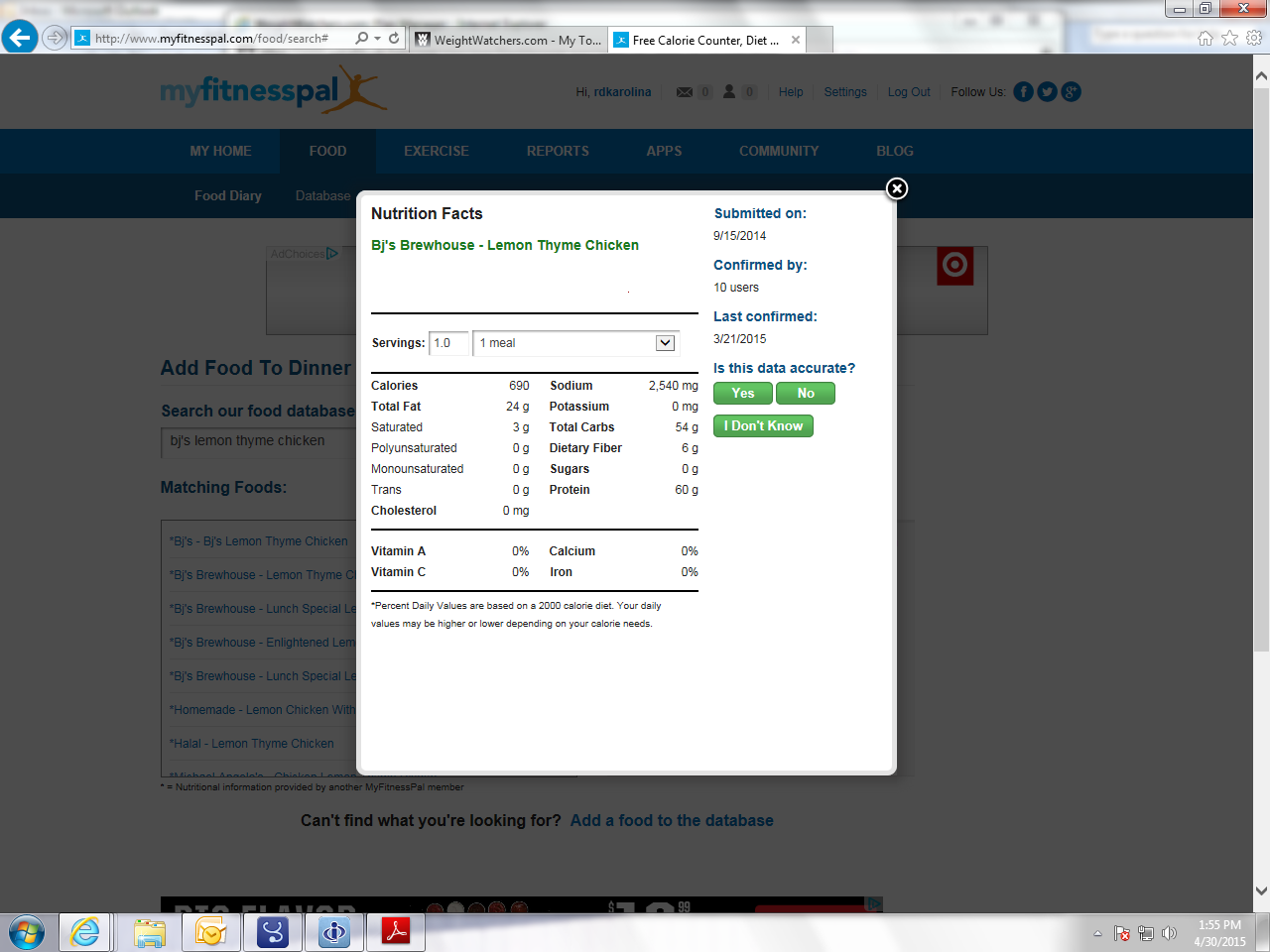
  1. Limited database. The food and activity database on the Weight Watchers tracker is limited. The database on MyFitnessPal contains faaaaar more foods and exercises, which makes tracking easier than it is with the Weight Watchers tool. Here is a comparison:
    WW food not foundMyFitnessPal food found
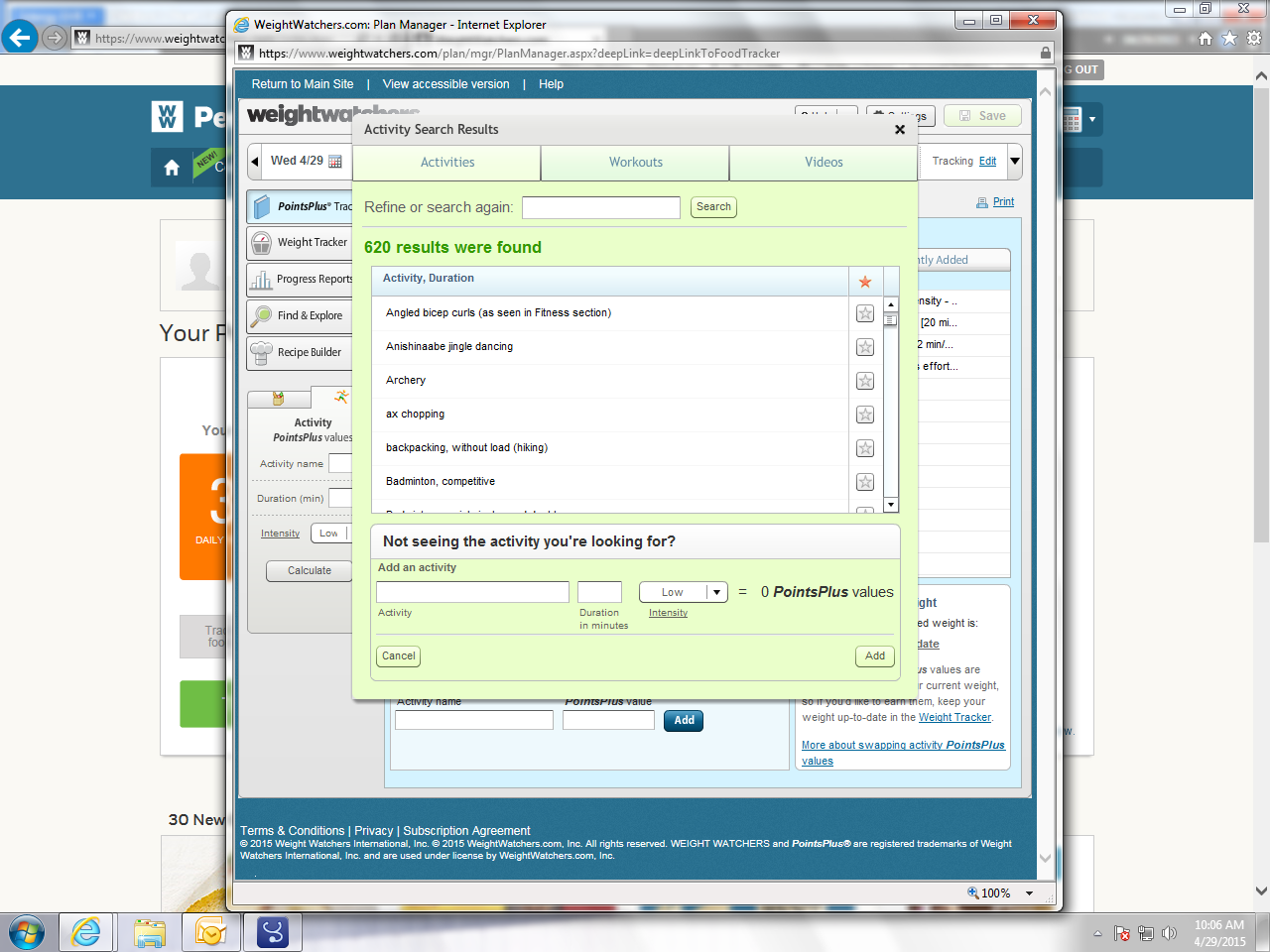
    The activity database had some hilarious entries! I’m sure that using an activity tracker would have been much more useful for estimating energy expenditure than these options:
    WW Screenshot Activity
  2. Questionable food choices. To keep Points Plus values down, I sometimes chose more heavily processed low fat foods instead of more wholesome, higher Points Plus value foods. For example, I switched from whole grain bread (3 points per slice) to Sara Lee 45 calorie 100% Whole Wheat bread (3 points per TWO slices). The latter contains more ingredients. This wasn’t true for everything, though. I tried fat free cheese for the first time (gross), and ultimately decided to stick with very thin sliced full fat cheese for my breakfast sandwiches to keep Points Plus values low.
  3. Redundancy. Ultimately, I got bored with the program. My coach’s ideas were fresh and exciting at first, but after three months of weekly follow ups, I started to feel like I wasn’t learning anything new and that spark of excitement kindof died. I’m sure this is what happens when I meet with my patients, too. After following up with a dietitian or nutritionist several times, it’s easy to feel like you’ve heard it all and lose interest. I think part of the key to keeping weight off is to stick with the healthy habits you built while losing weight and keeping yourself in check. If you notice the weight start to creep back on, strive to find ways to get excited about losing those couple of pounds again! I’ll write another post specifically about that sometime.

What questions do you have about the Weight Watchers program? If you’ve used the program before, what was your experience with it?